How to Tell Real High-Quality Wild American Ginseng
When people talk about wild American ginseng, they are not just talking about a root. They are talking about a plant with deep Appalachian history, strong traditional value, and a character that simply cannot be rushed. At Four Prong Herbs, we believe that learning how to recognize real quality is one of the best ways to appreciate what makes wild American ginseng so special.
For buyers, collectors, and anyone interested in herbs and botanicals, knowing what to look for can help separate truly desirable wild roots from lower-grade material. While no single feature tells the whole story, there are several important signs that often point to real, high-quality wild American ginseng.
What Is Wild American Ginseng?
Wild American ginseng, Panax quinquefolius, is a slow-growing woodland plant native to eastern North America. It grows naturally in rich forest soils, often on shaded slopes beneath hardwood canopies. Unlike cultivated ginseng, true wild roots grow at nature’s pace. That slow development helps create the shape, texture, density, and character that experienced buyers often value most.
Wild roots are shaped by years of natural stress, competition, weather, and soil conditions. That is part of why no two roots are exactly alike. Real wild American ginseng often has an aged, rugged, individual appearance that stands apart from roots grown under more controlled conditions.
Why Quality Matters
Not all ginseng is equal. Quality affects appearance, desirability, collectibility, and market value. A truly attractive wild root is often appreciated not just for what it is, but for the years it took nature to create it.
High-quality wild roots are generally those that show strong wild character, good maturity, sound condition, and careful handling after harvest. A root can be genuine wild ginseng and still be less desirable if it is damaged, poorly cleaned, broken apart, immature, or lacking the classic traits buyers like to see.
The Shape and Character of the Root
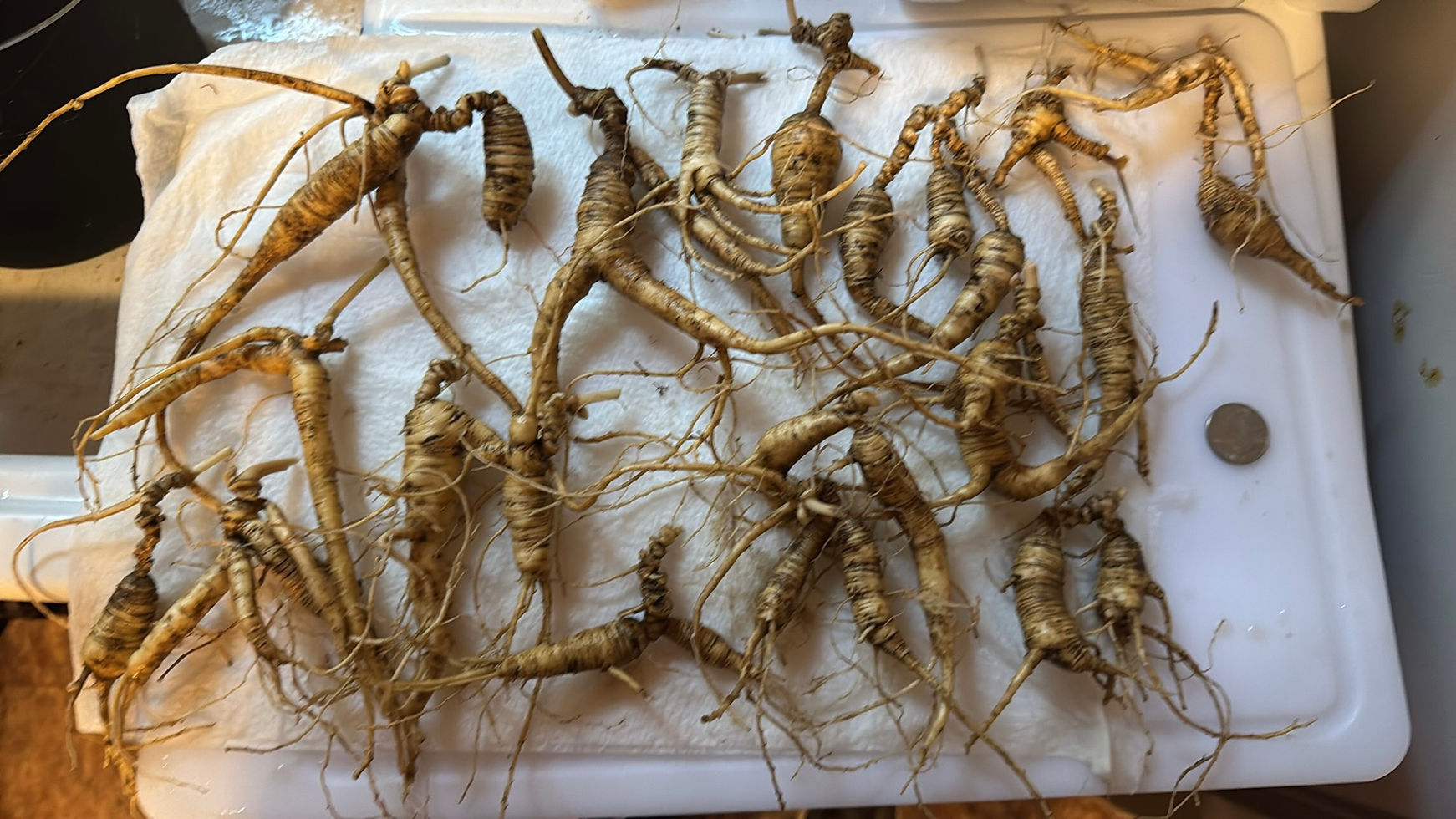
One of the first things people notice about a good wild root is its shape. High-quality wild American ginseng often has a distinct natural form that looks irregular, aged, and full of character. It may have a stout body, well-formed rootlets, pronounced wrinkles, and an overall appearance that suggests slow growth in the forest.
Wild roots are often not smooth, oversized, or overly uniform. In fact, when a root looks too perfect, too large, or too symmetrical, experienced buyers may suspect it is cultivated or at least not strongly wild in character. A good wild root often looks like something nature shaped over time, not something pushed quickly with ideal growing conditions.
Neck Length and Stem Scars
A very important feature in judging wild ginseng is the neck, sometimes called the rhizome. This is the section above the main root body where the stem grew year after year. On mature roots, the neck can show a series of stem-scar notches left behind from previous seasons.
These scars can give clues about age and maturity. In general, a longer neck with multiple visible stem scars can make a root more attractive to buyers who value maturity and wild character. While counting scars is not always perfectly straightforward, the presence of a developed neck with visible history is usually a good sign.
This part of the root is one reason truly nice wild ginseng is so admired. It tells a story. A mature neck with well-defined scars reflects time, survival, and repeated yearly growth in the woods.
Stress Rings and Wrinkling
Another thing many people look for is strong wrinkling and horizontal stress-ring character on the root body. These are some of the visual features that give wild American ginseng its classic old, weathered look.
Good wild roots often show:
- tight wrinkles
- firm texture
- visible age character
- a body that looks dense rather than soft or bloated
That does not mean every beautiful root will look the same. Wild ginseng varies naturally. But roots with a lot of natural character and strong surface detail often stand out from flatter, smoother, less distinctive material.
Rootlets and Natural Form
The smaller branching rootlets can also add to the appeal of a wild root. High-quality roots often retain fine natural structure instead of being trimmed down too aggressively or broken apart. Those little details can help preserve the root’s natural beauty and identity.
A root that still looks complete, balanced, and naturally formed is often more attractive than one that has been handled roughly or cleaned in a way that removes too much of its character.
Maturity Matters
Immature roots are usually less desirable than mature ones. A mature wild root generally has more developed shape, better neck character, more age detail, and stronger overall presence. Small roots are not automatically poor quality, but buyers often look for signs that a root had time to fully develop in the forest.
A root with visible maturity often has more story, more visual appeal, and more of the distinct features that make wild American ginseng special.
Wild vs. Cultivated Appearance
One of the most important things to understand is that true wild American ginseng usually does not look like cultivated ginseng. Cultivated roots are often larger, smoother, lighter in character, and more uniform. Wild roots tend to be denser, more irregular, more wrinkled, and more visually rugged.
That difference in appearance is a big part of what buyers mean when they talk about “wild character.” It is not just about whether the plant is technically wild. It is also about whether the root shows the form and age expression people expect from a naturally grown forest root.
Cleanliness and Handling

Even a great root can lose value if it is handled poorly. High-quality wild American ginseng should be cleaned carefully enough to remove excess dirt while preserving the natural skin, texture, and character of the root.
Overwashing, scrubbing too hard, damaging the neck, breaking off rootlets, or otherwise rough handling can take away from the root’s natural appeal. Proper drying also matters. A well-handled root should keep its form, color, and distinct features as much as possible.
At Four Prong Herbs, careful handling matters because once the natural beauty of a root is lost, it cannot truly be put back.
Signs of Lower-Quality Material
While genuine wild roots can vary widely, some things may reduce desirability:
- broken necks
- damaged root bodies
- overly scrubbed surfaces
- immature appearance
- poor drying
- mold or deterioration
- roots that look overly smooth or lack wild character
That does not mean such roots have no value, but they are usually not what people picture when they think of premium wild American ginseng.
Why Experience Matters
Recognizing top-quality wild ginseng takes time. Photos, descriptions, and general guidelines can help, but real experience matters too. The more quality roots you see, the easier it becomes to notice the differences in maturity, structure, density, neck development, and overall character.
That is one reason working with knowledgeable people matters. A reputable seller should understand the differences between ordinary material and truly attractive wild roots, and should care about preserving the integrity of what they offer.
The Beauty of Real Wild American Ginseng
Part of what makes wild American ginseng so remarkable is that it reflects time. A really nice root can show years of life in the forest in a single glance. Its wrinkles, neck scars, shape, and aged character all point to something nature created slowly and honestly.
That is why real high-quality wild American ginseng continues to hold such fascination. It is not just another botanical product. It is a piece of the forest’s history.
At Four Prong Herbs, we have a deep respect for wild American ginseng and for the standards that make exceptional roots stand out. Whether you are interested in whole roots, powder, or simply learning more about this remarkable plant, understanding quality is the first step toward truly appreciating it.
If you are looking for genuine wild American ginseng and want roots with real character, maturity, and careful handling, Four Prong Herbs is proud to share our passion for one of Appalachia’s most iconic botanicals.


Comments